Skip to content

Home / Product development

AI-native product development

Our AI-native product development approach combines senior engineers and coding agents to build customer-facing products, internal platforms, and AI systems, helping teams move from idea to production faster while keeping critical product and engineering decisions with experienced people.


Building software since 2016100+ clientsSoftware used in 75 countries

Implementation is no longer the main bottleneck.

Coding agents reduce the manual effort behind implementation, testing, debugging, and documentation, allowing our engineers to focus more on product decisions, architecture, user experience, security, validation, and quality. The result still depends on clear problem definition, strong product context, and careful engineering oversight.

26%

More tasks completed

30%

Shorter project cycles

50%

Faster new-code development, at the upper end of measurements

Less of the cycle is spent producing every line manually. More of it is spent deciding what should be built and checking whether it works.

How we shape the product before we build it

Before custom software development begins, we clarify the user, business problem, workflow, constraints, integrations, and expected outcomes. This helps reduce product risk before the team commits to a larger implementation.

Product discovery

We define the users, their current workflow, the problem they need solved, and the business outcome behind the product.

Workflow design

We map how information, decisions and actions should move through the software.

Scope and prioritisation

We separate what the first release needs from what can wait. AI allows us to build more, but adding more features is not automatically a better product.

Prototyping and validation

We create and compare different product flows before committing to one direction. Faster prototyping gives the team more opportunities to test assumptions early.

Product architecture

We decide how the software should handle data, permissions, integrations, scale, security and future change.

Measurement

We define what should be measured after launch, from adoption and conversion to time saved, process completion or operational accuracy.

What AI coding agents change in product development

Five things change in the work itself once implementation stops being the constraint.

Reach a working version sooner

AI-assisted implementation helps us get working software in front of users earlier and start validating it with real feedback.

Explore more than one solution

Faster implementation makes it practical to compare different workflows, interfaces, and technical approaches before committing to one direction.

Improve through more iteration

Shorter cycles between an idea, working software, and user feedback give the team more opportunities to identify weak assumptions and improve the product.

Build software around the actual need

When implementation requires less manual effort, we can spend more development capacity adapting the software to the real workflow instead of simplifying it to reduce implementation time.

Focus engineers on harder problems

Coding agents handle more routine execution, while senior engineers spend more time on architecture, security, integrations, edge cases, and critical product decisions.

Replace expensive software workarounds with a system built around your business.

Many companies pay for large CRM, ERP, and operations platforms, then add licences, plugins, integrations, spreadsheets, and manual workarounds to make them fit. With AI-assisted engineering, we can build focused custom software solutions around your workflows, data, permissions, and integrations, starting with the process creating the most cost or friction and expanding once the business case is proven.

Custom CRM systems

Sales workflows, account management, customer history, communication, approvals and reporting, designed around the way your team sells.

ERP and operations modules

Planning, procurement, inventory, fulfilment, production, finance and operational reporting, connected to the systems you already use.

Admin and back-office platforms

One place for teams to manage customers, content, orders, documents, permissions and internal processes.

Workflow automation

Software that moves information between teams and systems, assigns work, checks conditions and reduces manual handoffs.

Employee and partner portals

Role-based access to data, documents, requests, reporting and shared workflows.

Internal AI assistants and agents

Assistants that work inside the tools your team already uses, with permissions and approval points where the work needs them.

Customer products, internal platforms, and AI software.

Customer-facing software

  • SaaS platforms
  • Web applications
  • Mobile applications
  • Marketplaces
  • Customer and partner portals
  • Booking and commerce platforms
  • Subscription products

Internal business software

  • Custom CRM systems
  • ERP and operations platforms
  • Admin tools
  • Procurement and inventory systems
  • Finance and reporting workflows
  • Field-service software
  • Employee and partner portals

AI software

  • AI assistants and copilots
  • RAG and enterprise search
  • Document-processing systems
  • Voice and conversation intelligence
  • Decision-support software
  • Workflow agents
  • AI features inside existing products

Modernisation

  • Legacy software rebuilds
  • Cloud migration
  • Architecture modernisation
  • Data consolidation
  • API and system integration
  • SaaS module replacement
  • Workflow automation

We take responsibility for the full product.

Our custom software product development services cover strategy, design, engineering, quality, launch, and ongoing development. One team owns the work end to end, so you do not have to coordinate separate software development services across multiple vendors.

Step 01

Product strategy

We turn the business opportunity into a defined product, delivery scope and measurable outcome.

Step 02

UX and product design

We design workflows, interfaces and interactions before investing heavily in implementation.

Step 03

Architecture and engineering

Our architects and engineers design the system and use agents throughout implementation, testing, debugging and documentation.

Step 04

Quality and security

QA, code review, automated checks and security controls are part of the delivery process.

Step 05

Launch and development

We deploy, monitor, maintain and continue improving the product after its first release.

Here is what we have built.

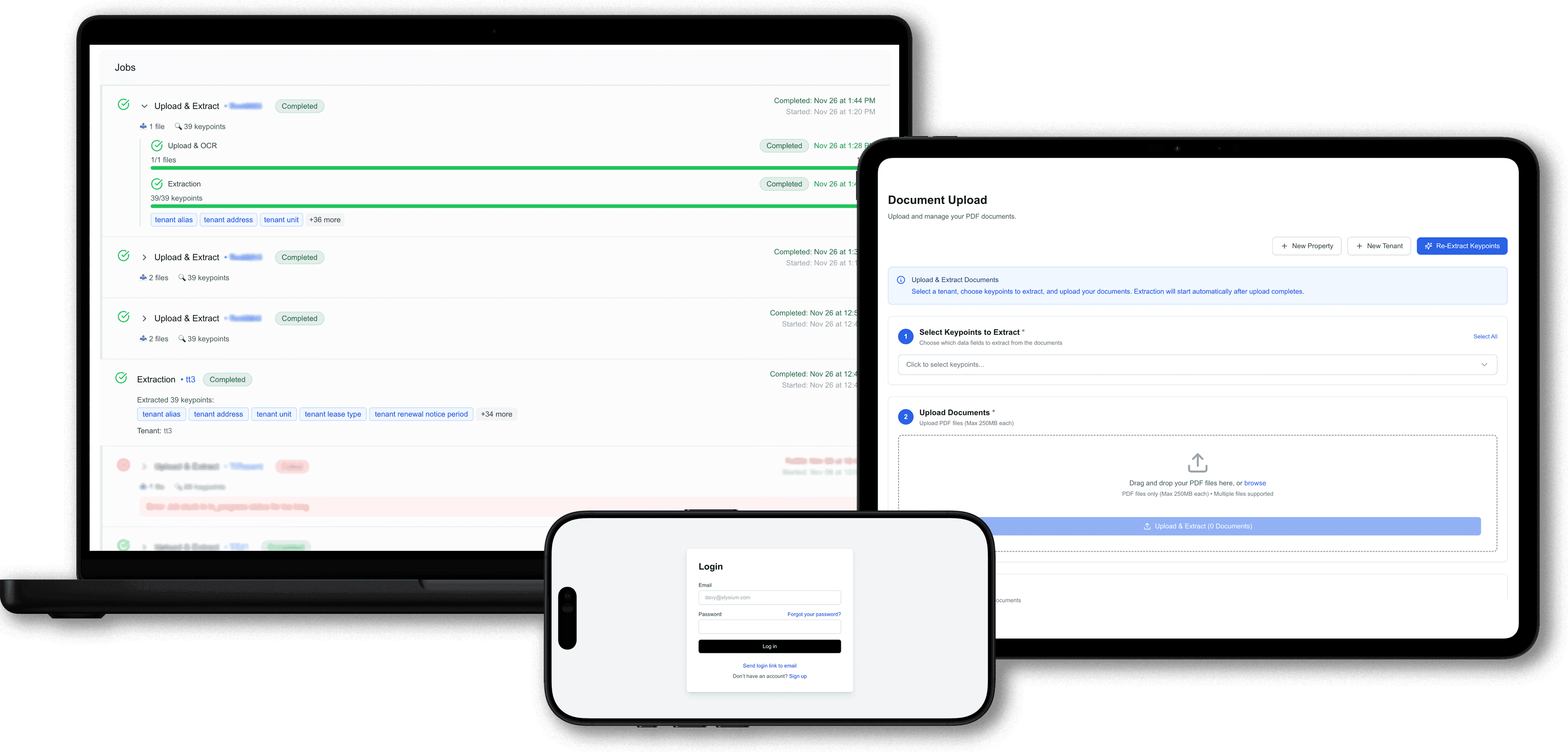
The Elysium platform interface
AI and data platform

An AI platform that reads commercial property documents

Leases, loans and amendments arrive as unstructured files. Elysium turns them into a queryable knowledge layer analysts can ask questions of, instead of reading hundreds of pages to find one clause.

Client
Elysium — commercial real estate, USA
We owned
The extraction pipeline, the application on top of it, CI/CD
After
Documents became searchable data. Live, and still being built on.
Read the case study
Complete software build

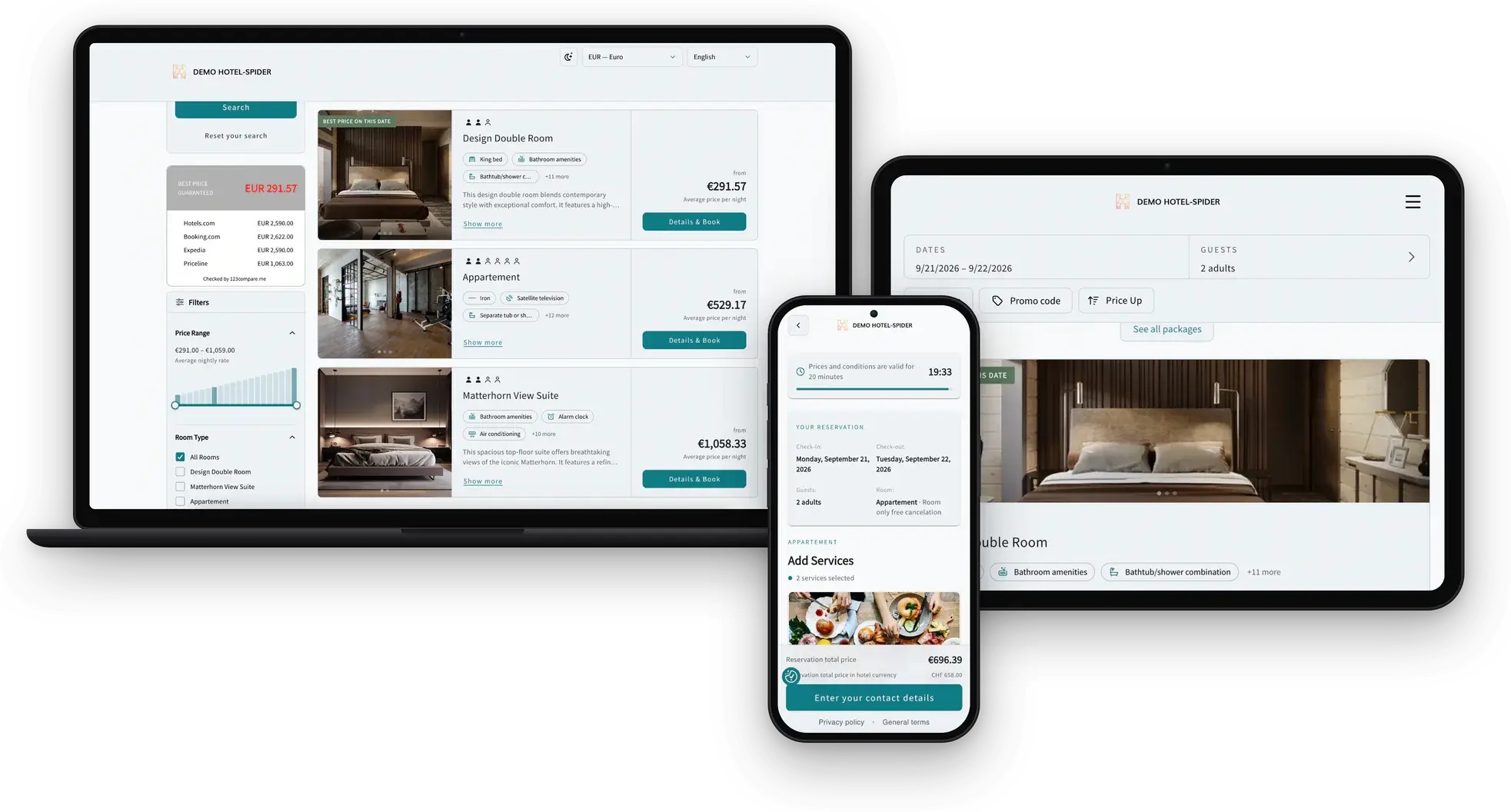
The booking layer behind independent hotels

A booking engine, central reservation system and channel manager wired into the systems hotels sell through. A bad sync here becomes a real overbooking, so this is as much about correctness as it is about features.

Client
Hotel-Spider — hospitality software, Switzerland
We owned
Backend, frontend and QA across the product
The team
A dedicated team, managed by us, six years running
Read the case study
The Hotel-Spider booking interface
Staff augmentation · Netguru, Poland

Netguru has 500 engineers of its own. It has staffed with ours since 2018.

We augmented Netguru’s teams with nine senior engineers who integrated quickly, contributed to 12 web and mobile projects, and provided long-term technical expertise.

Client
Netguru — digital consultancy, Poland
We staff
Engineers embedded in their delivery teams
Running
8 years and counting, continuously
Read the case study
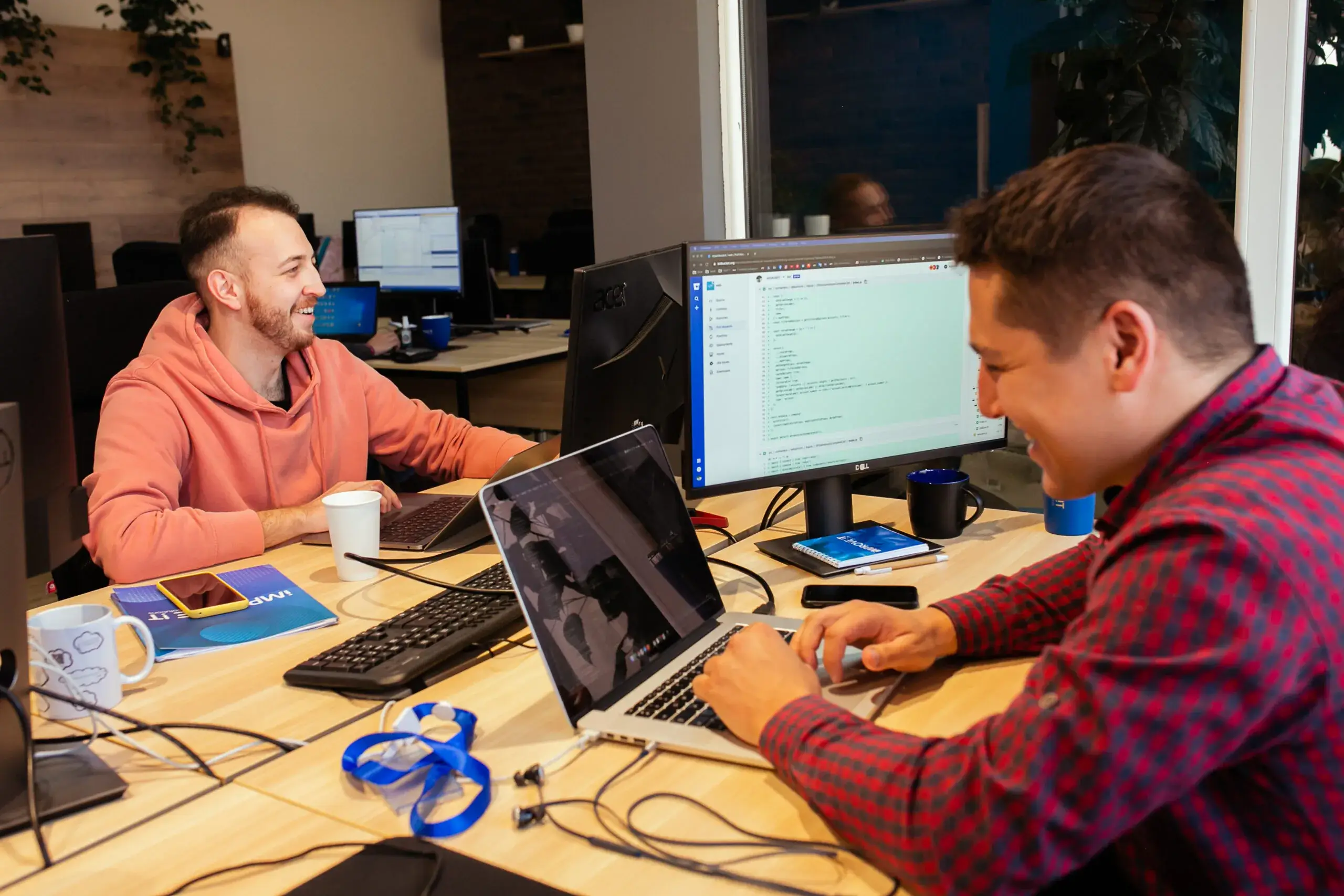
ImproveIT engineers at work in Chernivtsi

What clients say about working with ImproveIT

4.9/5 from verified reviews on Clutch

“I have worked with ImproveIT for more than 3 years, as a mobile product manager for Photoweb and now as a director of Piiics. In both, the technical challenge is quite high. The dev team has been highly motivated and professional.”
Clement PoursacPhotoweb Group · France · 5.0 on Clutch
“Thanks to their support with new talents and developers we were able to proceed with many new projects. We value their employees, and we always do our best to keep them as long as we can in our projects.”

Barbara KucharczykNetguru · Poland

“Their attention to detail is great, and they question us if they think it might be better to solve the issue in a different way. They really care about the product they're building.”

Michael KolomenkinEyeToAi · Israel

“Their ability to advise and provide professional guidance made them a go-to partner. The engineering team demonstrated outstanding dedication and technical skills.”

Yannick BlondeauHotel-Spider · Switzerland

“They understand the needs and manage the project seamlessly. They stand out for their professionalism, skills, and the quality of the candidates they provide.”

Andrew NolanAnitech Solutions · Ireland

“Great app that works with functionality exactly like we want it. Internal stakeholders are particularly impressed with the quality of deliverables. They take ownership beyond their contractual obligations.”

Alok AlstromBeyond Liberum AB · Sweden

“Within one year we reached a 99% crash-free user ratio on both operating systems, which was one of our goals. Within two years we reworked all our apps and improved our conversion rate by 50%.”

Axel BouthorsPiiics · France

“All tasks are done on their side, they've always delivered on time, and their code quality is good. The developer assigned to us is always available.”

Luka SikicOnpreo GmbH · Germany

“We were very impressed with the wide range of experts. We've been able to significantly speed up the development of a number of our projects on a very reasonable budget.”

Martin Enderleintencio s.r.o · Czech Republic

“Exceptional service delivery: in-time, on-budget, with high quality and professional advice.”

Marcus ZedlerCamyylyon · Switzerland

“With a limited budget, we have been able to master 3 new tools: Rich Snippet, Rating-Widget, Survey. A good outcome that helped me and my lead frontend developer.”

Carsten SchaeferTrust · Germany

“Developers are experienced. They can discover the main potential issues and are able to solve them beforehand.”

Romain CoiraultLalalab · France

“A highly adaptive team that offers helpful insights and delivers work at reasonable rates.”

Didier GromaireCedemo · Monaco

Questions about AI-native product development.

How much does AI-native product development cost?

It depends on the product, what the first release has to cover and the team it needs. You get a proposal with team shape, timelines and costs before work starts, and discovery firms up the figure for the first release. Coding agents let a smaller team cover some work; where the roadmap needs several specialists at once, the team still includes each of them.

What does AI-native mean for our product?

It describes how we build, not what the product has to contain. Our engineers use coding agents throughout implementation, testing, debugging and documentation, and spend the time saved on product decisions, architecture, user experience and security. A named engineer always decides the scope, the boundary an agent works inside, the merge and whether a release ships.

How do you keep code written with AI agents secure and maintainable?

Like the rest of the code: it goes through code review, automated checks, QA and security controls, and a named engineer signs the merge. Before implementation starts, engineers decide how the software handles data, permissions and integrations, so agents build inside decisions a person has already made.

How does a project start?

With discovery: the users, their current workflow, the constraints and integrations, and what the first release needs. It ends with a written plan that gives the first release a date and a figure.

How soon will we have a first release?

It depends on what the first release has to cover and how soon we can reach the systems it connects to, so the plan after discovery gives the date. Coding agents help us put working software in front of users earlier, so each next decision rests on evidence instead of a projection.

Can you work on a product we already have?

Yes. We take over products another team built, rebuild software that is not holding up, and add engineers to an in-house team. For Photoweb we took over development of the iOS and Android apps after a knowledge transfer on site in France. For UbiGo, we analysed the first version a previous team had built, then rebuilt the iOS app from scratch.

Do we own the code and the intellectual property?

Yes. IP assignment is part of the contract, so the code we write for you is yours. We sign an NDA before discussing anything in detail.

Do you stay on the product after launch?

Yes. We deploy, monitor, maintain and keep improving the product after its first release, and the named engineer who signed the release stays on it. What gets built next follows what was measured after launch, such as adoption, conversion, time saved or process completion.

Tell us what you want to build.

Bring us a product idea, an internal workflow, an existing platform, or software that needs to be rebuilt.

We will help you shape the product, define the first release, and explain how we would take it from concept to production.

  • 1Tell us about the product and its stage
  • 2Get a proposal with team shape, timelines and costs
  • 3Start in under a week

We sign an NDA before discussing anything in detail. We reply within 24 hours.

Contact us

Or book a call and skip the form.Your details are handled under our privacy policy.